(eARC) Minbak by Ela Lee
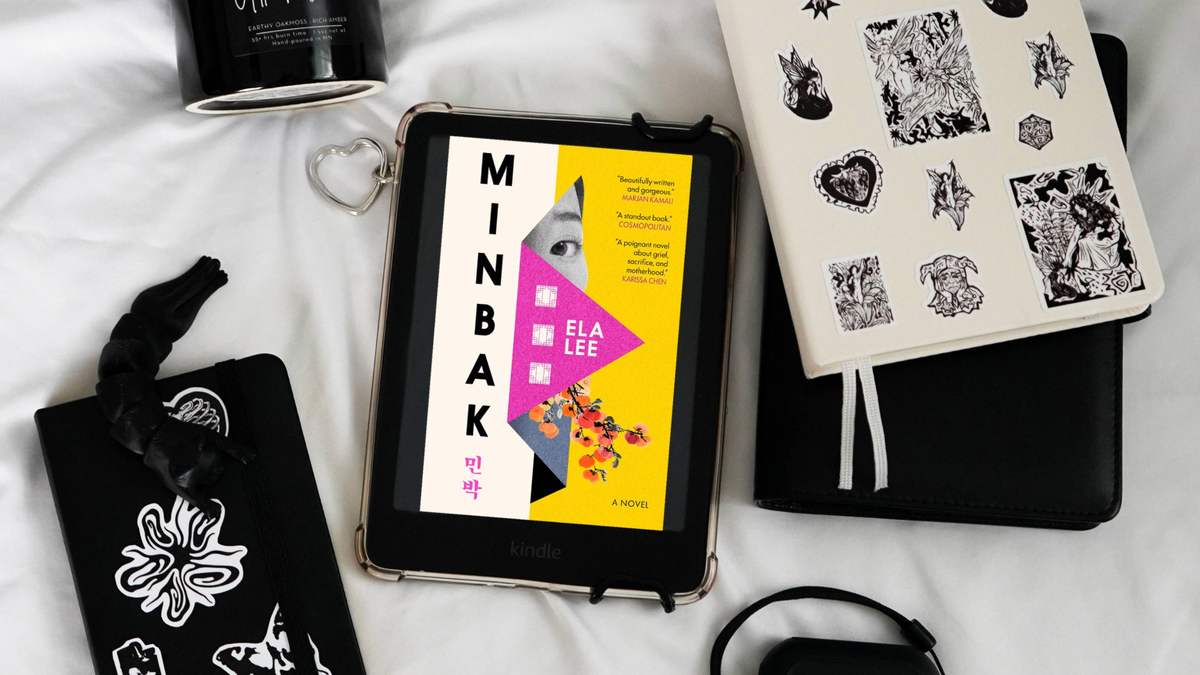
Thank you to St. Martin's Press for the eARC under the SMP Early Readers Program. Publication Date: February 16, 2027.
Synopsis: Minbak (n.) a lodging in a private home
Korea, 1985: Hana Park's future is bright. A star student and beloved daughter, she dreams of a life beyond working at her family's local minbak. After a devastating encounter with a foreign guest, Hana sheds her past and flees to London to capture the future she so desperately desires, leaving her heartbroken mother Youngja to pick up the pieces.
London, 2008: When her husband dies unexpectedly in the midst of the global financial crisis, Hana is left with a pile of debt and no way to pay it off. With her teenage daughter Ada and a declining Youngja relying on her, she has no choice but to move her family into one bedroom and open the rest of their home to paying guests as a minbak.
As tragedy brings the three women together, old tensions surface, and the family's long-hidden secrets threaten to erupt. With no one to turn to but each other, Hana, Youngja, and Ada must confront their complex history, crossing continents and generations to find truth, forgiveness, and compassion.
Review: Across three generations of women, secrets and state betrayals unravel into a rocky reckoning with mixed-race identity, leaving each woman searching for a belonging the world was never built to give them.
This book reads like a study of that search. Though it moves through multiple POVs, three women center it, each navigating betrayal, deception, and a suffocation that comes not only from the world around them but from one another. Their stories span generations and continents, from South Korea to London, and through them the novel puts into perspective how women, particularly unmarried women, women without men, women failed by men, are treated by a manufactured state of government. And more importantly, that state's participation in another manufactured system, South Korean foreign adoption to the US.
This becomes the through-line connecting all three women's lives, and it exposes how these systems turn women into instruments of failing each other. There is a disgusting pervasive lack of autonomy from a lot of angles but that's the most captivating part of it all. This book went into so much heartbreak yet critique. You cannot help but just feel these conflicting emotions of fevered disappointment and hopelessness because agh!
My biggest gripe is the transition into the book's last quarter. I understand the need to fold in the factual, historical material is essential to what the novel is doing but the shift itself could have been smoother in my opinion. The multiple POVs: I didn't mind them structurally, but some voices are simply stronger than others, and I think the sequencing could've been handled differently.
Throughout the book we're given missing pieces meant to come together, and while each additional POV does deepen the context, the abruptness of the switches sometimes didn't do justice in explaining certain things, you don't always get to spend enough time with a character before you're pulled away. BECAUSE TRUST ME, I WANTED TO KNOW MORE.
What happened to the relationship? HANA? ADA? YOUNGJA? But especially Hana, WOW! One of those most complex characters I've read in a while. Cold, dismissive, concealed. And Ada?
My, what a heartbreakingly beautiful contrast. The daughter navigating this in-between, two worlds unknown to her, yet caring such a tenderness. The prose is beautifully rich throughout. It was a pleasure to be immersed into South Korean culture.